
The covenant
Last week we flew back to America. I think it’s about five years since we’ve been here last, but now, at 0530 hrs, with black coffee in my old Waffle House mug and the rest of the clan sleeping peacefully at the in-laws’ house, the warm September air in South Carolina feels comforting and familiar.

It was 90°F (32°C) yesterday, with very high humidity. We took the kids to the play park in the morning, and the swimming pool in the afternoon. They loved it, and my wife and I loved having Papa, an Uncle and an Auntie to assist with the kids. Normally when I go swimming with a two, five and eight-year-old, I come out with throbbing quadriceps, because I haven’t actually been swimming, but rather, I’ve been squatting to water level in the shallow end and carrying some toddlers around the pool for an hour. Not so with familial assistance! I actually managed to get in a few lengths myself, which was lovely.
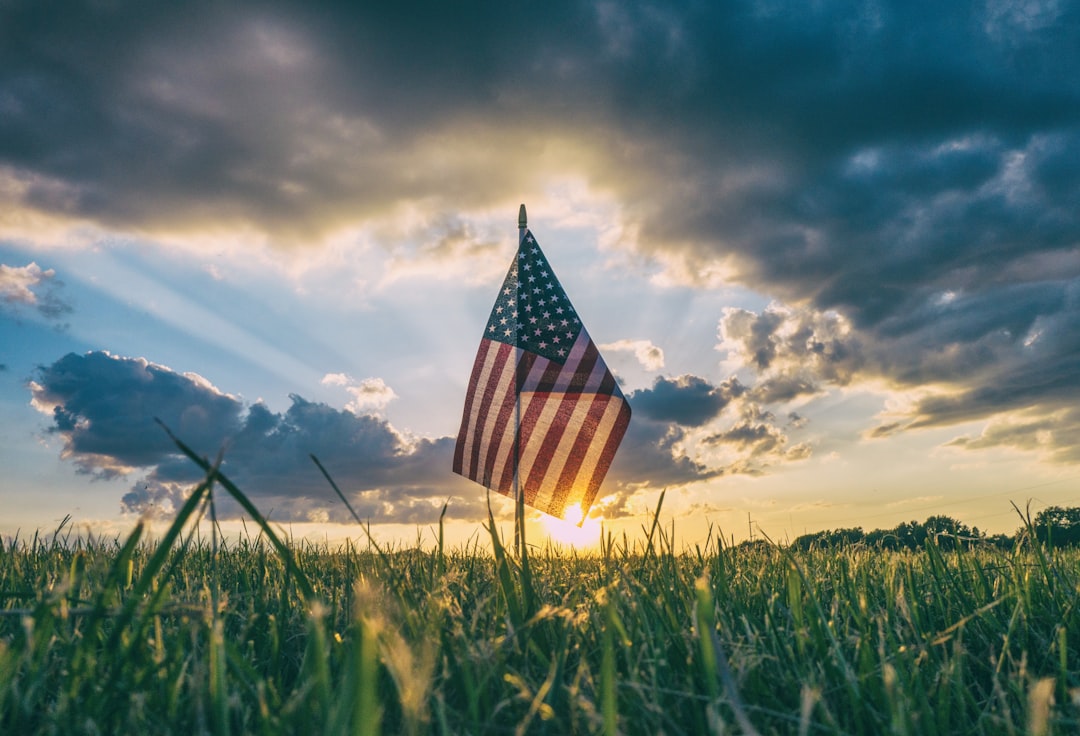
These fancy (by my standards) South Carolina neighbourhoods, just Northeast of Charleston are Republican heaven on earth. As the most military state in the union, there is a gas guzzler in every driveway, a flag flying on every porch, and barbeque in every back garden. The crime wave currently sweeping this strained and tired nation has not reached this part of South Carolina, where every other person owns a gun, and the State recently removed any requirement for a handgun permit. A constitutional carry state with castle doctrine laws – and a population raised on shotguns – is not a place where crime can thrive easily. When I lived here you would often see US Navy Seals out for lunch while shopping at Harris Teeter or SWAT team cops reading books to little children at the Barnes and Noble story hour next door. With military schools like the Citadel, and US Naval weapons and Submarine base, an Air Force base at the airport and a sealift command presence at the port of Charleston, you can’t help but feel safe.
Here, you’re still on the inside. Part of the citizenry of a great and good empire, where manners are impeccable, and community and fellowship come easily. Guy Ritchie’s movie, The Covenant, makes sense here.
New York was different.
From the moment we got to the departure gate in Edinburgh airport, you could start to feel the nervous, panicky, intense energy exuded by the New Yorkers boarding the flight. They stand up too early and crowd the entrance to the boarding area like they are fighting for a spot on a crowded subway car. Everyone’s a loudmouth, everyone’s a big shot, and they all have to be first.
It was my wife’s cousin who was getting married in Roslyn on Long Island, so we didn’t have to go anywhere near Manhattan. We stayed firmly in Great Gatsby country for the duration of that part of the trip, near Sand’s End, Port Washington, Old Roslyn, and Hempstead Harbor. The wedding was beautifully framed by the sound of summer crickets and a tree-lined waterfront. F Scott Fitzgerald’s Valley of Ashes has gone and is now a sprawl of neighbourhoods with multi-million dollar McMansions set at four-acre zoning and punctuated by expensive strip malls.
Old Roslyn is really beautiful and feels very New Englandy, with more pre-Civil War era buildings than anywhere else I’ve been on Long Island. The Victorian-era clock tower stands at the Y-shaped intersection on Main Street, giving this the organic feel of an evolved community, rather than the rudderless disintegration you get in modern sprawling suburbs. George Washington stayed at one of the hotels here, and if you walk around the shops and get an old-fashioned frozen custard, you could easily feel transported back to the 1950s, with the concrete pavements, brick buildings, and wooden telegraph poles lop-sided and groaning under the weight of too many modern cables.
The Jazz band played, and the white dormer window of Sea Cliff Manor stood proudly enough above the roof line to look almost like a little lighthouse shining a green light over the bay.
Our itinerary included trips to the old neighbourhood where my wife grew up. The kids played in the old playground and had dinner at a classic Long Island Diner. We took the kids for pancakes at IHOP and doughnuts at Dunkin Donuts. IHop stands for International House of Pancakes, but Papa calls it International House of Pain, because of the indulgent portion sizes. Several trips to Bagel Boss – which was gearing up for the Jewish High Holidays next week – gave that part of our trip a distinctly Hebrew flavour. Which was great.

Bagel eaters is a euphemistic term that might be considered by outsiders as a pejorative name for Jewish people, but among this Long Island crowd, it seems to be an affectionate moniker. As a haggis muncher myself, I have observed that food-based racism is always the least controversial because it is usually entirely accurate. Appreciation of a real New York bagel is a ritual that absolutely identifies and binds the American Jewish diaspora, cutting across any notional boundaries of orthodox, reformed temple, secular or atheist more effectively than any spoken creed or oath of citizenship ever could.
For those who don’t know, the apocrypha surrounding the bagel – essentially a roll with a hole – their origin is tied intimately to the medieval persecution of the Jews in Europe. Protectionist over-regulation prohibited Jews from baking bread or owning a bakery. Ever the adaptable tribe, medieval European Jews realised that by boiling the bread in water before finishing over a fire, meant their rolls were not technically baked. And by putting a hole in the middle, they could be stacked on a wooden pole, or suspended on string, and then sold by wandering street vendors, thereby negating the need to own a bakery with a shop front. Pretty clever, right? Or sneaky, depending on how antisemitic you’re feeling.
These home comforts remind me of what I love about America. Totally unashamed, filthy, consumer capitalism that can satisfy any material demand that you might possibly have, any time of day or night, any day of the week. Food and retail rule supreme in this country, and commerce is truly what unites the many varied cultures that inhabit this vast continent. Just like when I worked with over 100 different nationalities on the cruise lines, we all got by, because the only colour anyone cared about was green.
But that is also what can make you hate America.
With so many of us together in New York, Papa hired two rental cars. One of which was a Honda Odyssey Elite. An absolute monster of a vehicle with a selection of conveniences that both delight and infuriate in equal measure. With eight seats wide enough to fit a full-sized American, and a trunk large enough for all their luggage too, it boasts not only its own airline-style DVD player, A/C and headphone jacks in each seat, but its very own built-in vacuum cleaner in the trunk! Impressive, but troublingly indulgent. What drove me mad about that car though was the self-closing electronic doors. With the lightest touch of a little button, or a long press on the remote control keyfob, you could open the side sliding doors or the trunk from a distance. But what you cannot do, is manually operate it.
In the quest for comfort and convenience, we have gone too far. We have robbed people of the god-given manly pleasure of slamming a car door closed.
With the electronic closing, you have to sit and wait, passively, infuriatingly, as the door takes its own sweet time to close itself. But because of litigious safetyism, the doors have a hair-sensitive safety stop, so that if your toddler puts their hand in the way, the door slowly begins to open itself back up again. Or, when it’s 100°F outside, it jams, because the metal rails expand, and you have to turn the car on and off again to reset the doors. All the while, the Air Con is struggling to cool down the entire world, instead of the car. Don’t they know how hard it is to wrestle a toddler into a car seat? You gotta get that done quickly, before shouting ‘watch your fingers’, and slamming that door firmly closed to demonstrate your utility to the matriarch of your family! And how are the kids supposed to know how much they’ve annoyed you, without being able to assess the loudness of your door slam?
It’s not just the physical conveniences, but the paralysis of the mind that comes from an overwhelmingly unlimited plethora of consumer choices. For example, there is no menu at a diner that isn’t at least 10 ounces in weight, due to the number of pages required to convey to you how many ways they can cook steak and eggs or chop some leaves. Every supermarket has an aisle of breakfast cereals that contains eight hundred thousand brightly coloured varied combinations of high fructose corn syrup, wheat and chemicals. Despite recent devaluations due to the woke wars, Target remains standing as a lesson in object constancy, with stores that sell literally all of the things.
I think this excessive choice is one of the reasons why New Yorkers are so tense, and rude and angry all the time. Standing in line at Bagel Boss is a good example of what I mean. As an outsider, looking in, you can’t quite tell who is being the rudest, the staff or the customer. All these fancy rich housewives come in with the most esoterically specific order you could possibly imagine. ‘I’ll do two onion Byalis, one with poppy seeds, the other without, that one with white fish, the other with butter and a schmear and lox. Two rainbows, one toasted with butter, the other without, a chopped salad, no nuts, gluten-free dressing, grapes cut in half sideways, NOT lengthways, dressing ON THE SIDE’… etc. The woman behind the counter interjects with both instructions and questions of clarification, with a pissed-off look of contempt, and a not even remotely disguised irritation. But to be fair, the woman giving the most specific order for food you’ve ever heard in your life does so while simultaneously having a telephone conversation with someone else. Both people are wasting each other’s time and precious life energy, by going over the minutiae of this food order, as though it were a Japanese ship-building contract, but by doing so half-heartedly, and each expecting the other to somehow know psychically what the other one needs from the interaction.
When Americans come to my country they never shut up complaining about the lack of ‘service’ in Scotland. But I tell you, I really don’t see service here in America anymore.
At La Guardia airport, all of the restaurants and kiosks at our terminal had a self-service scanner. We stood in line, picked out sandwiches and some things for the kids, and put them on the counter. Then the girl just disappeared in the back. It took us ten minutes to figure out the machine, and the girl eventually just came out front and did all the scanning and packing for us anyway.
Our hotel was modern and clean and beautiful, but very poorly managed. The fire alarm went off at 0400 hrs one night because someone in the galley put a fork in the microwave. Breakfast was nothing but overpriced confusion. We had to request that our room be cleaned four times before anyone came near it, and they didn’t even bother to vacuum or remove four bags of garbage that were completely full. There was no cold water! Both taps marked hot and cold, were plumbed into the hot water supply, and so was the toilet!
When I asked my wife’s family to speak to the staff, I reasoned that as the staff were American, and so were my family, they might be rendered greater assistance. They laughed at me and explained that none of the staff would be American, or native English speakers. I don’t believe this assumption was entirely accurate because the vacant expression and constant cell phone distraction of the concierge and bartenders and waiting staff all spoke to me of the childish entitlement of people born and raised on Long Island. As did the fifty-dollar price tag on a single glass of Oban whisky.
They were either born and bred New York a**holes or managed to intuit and adopt the attitude of entitlement so ubiquitous in their new home with expedience.
Obviously, debt, hyper-financialization in the boomer generation (who have now fled to Red States after ruining their own states) and this consumption-led attitude have compounded over time. The American dream is no longer self-sufficiency, but total dependency. The average American youth values comfort so much that they have become almost disabled. The American dream for them is to be an amorphous unphysical blob, suspended in a vacuum, and periodically stuffed with pizza by an automated robot server, while an AI Instagram bot makes you wealthy and famous without you ever having to earn any of it.
I love America, and the American people, but this element of the culture makes me deeply uncomfortable. I think it is the same thing that made F. Scott Fitzgerald uncomfortable. The wealth of the North Shore of Long Island – the 1920s Gold Coast – was built during a period of near-perfect property rights, a solid currency, an absence of income tax, and before child labour laws. This time period, the end of Christendom and the destruction of the Western world after World War One, saw the rise of pleasure-seeking as the new religion. Born of nihilism, and served by the miracle of capitalism.
I don’t believe that consumer capitalism is its natural form. This is too loveless. I believe in producer capitalism. My Pakistani stepmother’s mother told me that she had visited New York once in the 1950s and that everyone had been exceedingly well-mannered and polite to her. But when she visited again in the 1980s, the culture had morphed into the cortisol-inducing, ill-mannered and aggressive society we see today.
People need to know that mere pleasure is not happiness.
When Thomas Jefferson wrote Life, Liberty and the Pursuit of Happiness, he tried to capture something ineffable, but true. The original read Life, Liberty and Property, but changed property for happiness in a bid to prevent slave-owning states from arguing that the owning of human chattel was intended to be a permanent legal construct in the USA. The pursuit of happiness was meant to assume self-ownership as a given prerequisite for happiness. The assumption that every human heart contains all of humanity in microcosm, the fact that race was not a biblically accepted concept and that all human beings were assumed to image God, led by consistency of thought over time to freedom for all. The idea is, that as part of happiness, there must be self-ownership and the possibility of failure, for any glimpse of happiness to be possible at all.
That is what Utopians will never understand when they view the world not as it is, but as they demand it to be.
Bruce L. Nelson wrote this week about the classical liberal and practically-minded political philosopher, Alexis de Tocqueville. He quotes Tocqueville:
‘I sought for the greatness and genius of America in her commodious harbors and her ample rivers, and it was not there. I sought for the greatness and genius of America in her fertile fields and boundless forests, and it was not there. I sought for the greatness and genius of America in her rich mines and her vast world commerce, and it was not there. I sought for the greatness and genius of America in her public school system and her institutions of learning, and it was not there. I sought for the greatness and genius of America in her democratic Congress and her matchless Constitution, and it was not there. Not until I went into the churches of America and heard her pulpits flame with righteousness did, I understand the secret of her genius and power. America is great because she is good, and if America ever ceases to be good, she will cease to be great.’
I think that’s right. Not just for America, but for all of us.
When people say, God is Love, what love are they talking about?
It is the love of a marriage, of adoption, and of the family. The love that brings unity out of diversity. The love that forgives, encourages, and builds.
In contrast to the feckless employees of the international hotel chain, it is the love of the first-generation Indian woman who ran the local Dunkin Donuts. When the hotel staff couldn’t give my children breakfast, she did. You could tell she was a franchise owner not just because she was open at 0600 hrs, and because her daughter also worked behind the counter. You knew she was the owner because when we pulled up in our ridiculous car, she was out in the parking lot sweeping up. Meanwhile, the hotel staff were still wallowing in last night’s trash from the bar, gossiping and sitting on their cell phones.
Diversity can be a strength if there is love. Ownership, freedom and service are what facilitate that love.
While the government in America may no longer be good, that is never what America was about. It is about the people. Thankfully, the people here are still showing plenty of signs of love.