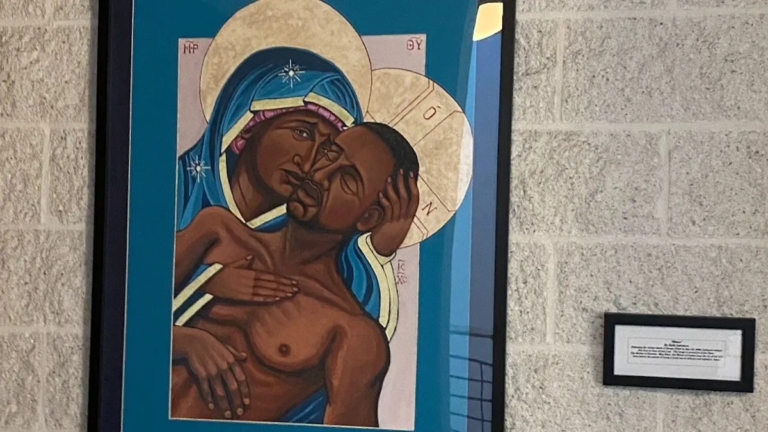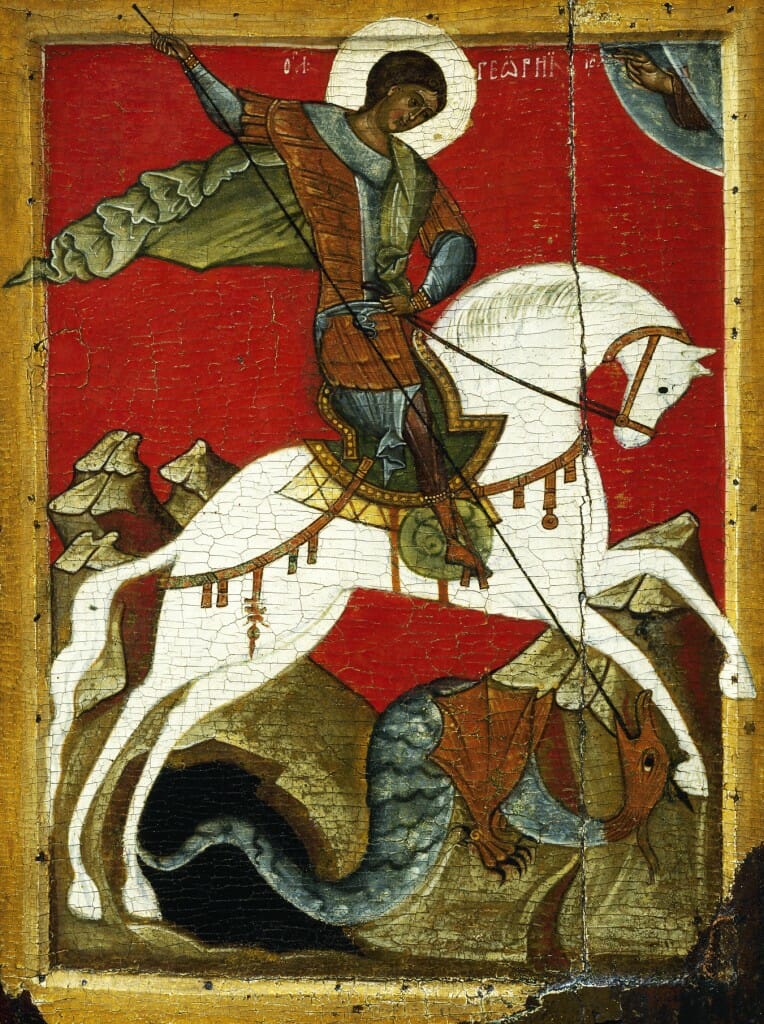
Cardinal points for those navigating the Peterson-Pageau-Pipeline towards the Metageliverse.
I am writing to you now from the German sector of the Southern North Sea. We’re down on weather, which means I have a lot of time to think, and some time to write.
The weather outside has been miserable. Videos of the adventurous residents of Kamchatka embracing heavy snowfall were filling social media feeds when I made my way over from Scotland. But I didn’t expect we’d have so much snow offshore. But with wind chill of about minus -13°C most days on deck, we’ve had snow almost every day that I’ve been out there. Thankfully, today, the weather is too bad, so I shall remain in my cabin with the heating turned up too high.
The standby time is a blessing. Sleep has always been the medicine of sailors, given by God to each one of our nautical forebears. And this week, to me as well.
Some days, we have solitude that even monastics would envy. Today is one of those.
It’s just as well. When I joined this vessel two weeks ago, I was still limping quite badly from an injury to my foot. Long-time readers may remember that I broke my toe on a ship a couple of years back, and that old injury has reappeared. For about eight or ten days before I joined, I had to restrict my ‘steps’ to about 1000 per day and keep my foot elevated. I barely left home because it was too painful even to put shoes on. However, thankfully, despite having to grin and bear through a couple of seriously painful days upon first joining, I’m more or less perfectly recovered now.
I’ll just say that for any of you with very high arches (Mine are about 35mm – perfect ballerina feet, according to my wife), make sure you replace your insoles more frequently. I’m making a new six-month rule of it, in fact.
High-arched insoles, fleece-lined trousers, balaclava, and a full set of Helly Hansen oilskins have saved the day. As have my new Cofra boots, with BOA fasteners. Game changer for those in pain, who need to stand outside in the cold, wind, rain, snow and sea spray for hours on end.
Rest, and I’ll be honest, prayer.
Praying for an enemy, earlier in 2025, taught me that an opponent is not always an enemy. As such, this year, I prayed to thank God for my pain.
This wasn’t a trick. It was because I had learned to accept that an omnipotent God already knows my pain. So, the prayer is for me.
The experience I received from thanking God for my physical pain was a kind of insight into purity. My acute physical discomfort, spiritual in its totalising monopoly on my attention, was a connecting thread of humanity. Like the inside of nesting Russian dolls, pain is an undeniable connection between us, our ancestors, our saints, our enemies, and more.
My muscles are now withering to nothing. The little vitamin D left in my Scottish system at this time of year is slowly leeching out of me, and my skin is like sandpaper due to the retinoids I’ve been taking to combat my folliculitis (also picked up on a workboat about 3 years ago). But I am happy. The ship is Norwegian, and so are the officers. That means my cabin is better than most hotel suites, the WiFi is better than it is ashore in the UK, and the food is excellent. Lobster, haddock, sushi and crab on seafood Sundays. Each meal is a banquet.
I told the chief steward about how the best we could expect on a certain 6-star cruise line I used to work for was hotdog Sundays. Followed by some limp brown lettuce leftover from the passenger’s restaurant from time to time.
He laughed hard, briefly. Before composing himself and saying, ‘oh well, I guess you could do that. Hotdogs. Hmmm. Yes’.
You see, Norway never sold out it’s Merchant seafarers to globalism to the same extent that the UK or most European nations did. So, they don’t view it as very big or clever to make people suffer while they are at work offshore. Outsourcing your entire nation’s capacity to trade to third parties and flags and crews of ‘convenience’, while pissing away any sovereign wealth that could be generated from the country’s natural resources didn’t seem so smart to a nation of farmers, engineers and fishermen. Norwegians simply didn’t do it.
They also never seemed to suffer from the false mind/body dichotomy that has gripped the UK ever since René Descartes decided to stop taking his Lithium and start pushing the Matrix simulation theology of his day. I think that’s why the Norwegians, to this day, can complete an entire epic infrastructure project for the cost that would be spent on the Environmental Impact Assessment (EIA) in the UK.
They do not seem to have fallen in love with the intellect at the expense of the integrated whole, in the same way that the British have.
Although it’s probably harder to entertain flights of fancy when you’re too busy keeping trolls away from your winter sardine stash.
In any case, I’ve been thinking about the Cartesian dilemma since the new year.
As I’m sure many of you are aware, world-famous cartoonist, hypnotism enthusiast, and libertarian thinker and commentator, Scott Adams, passed away from prostate cancer on the first of January 2026. Much digital ink and YouTube airtime have been spilt both in eulogising and criticising Scott Adams since then, so I’m certain you haven’t missed it.
I must confess, I felt nothing for Scott’s passing at the time. Which, on reflection, truly surprises me.
I have only been thinking about him and his work because of a series of interesting musings on the subject of Scott Adams’ final message, delivered by Paul VanderKlay.
Known as PVK for short, Paul is a pastor at Living Stones Christian Reformed Church in Sacramento, California. The same state where Scott Adams lived and died.
I picked up PVK’s podcast last year after the ARC conference in London. By sheer chance, I ended up sitting just in front of him during one of the sessions in the main hall. I listened (eavesdropped) as he had an interesting discussion with his companion about the ‘New Epistemology’ that we are witnessing develop in our post covid time.
I found these eavesdroppings worthy of rumination, and I vaguely recognised him from somewhere, so I made a point to start following his podcast. I’ll be honest, though, I find it pretty tough going normally, so I’m not a regular listener. His voice is really difficult for me to follow, and a sort of wide-jawed loudness and lengthy continental vowel sounds used by many North Americans have taken some getting used to for my ears. Moreover, a large part of the discussion involves not only the subtle inference and cultural idiom that Americans tend to use, but a fair amount of time spent referencing and dissecting clips of other commentators and cross-referencing the myriad branches and bifurcations of protestant denominations in the US. Of which there are around 78 million, as far as I can tell.
Estuary. Star Wars. Vervaeke. The conversation is broad-ranging and tracks the general online edge of the Pageau/Peterson zeitgeist shift that I’ve been following. I can barely make heads nor tails of John Vervaeke sometimes, but PVK follows along nicely behind him, with a view of Protestantism as the marketplace of ideas for the soul. (As far as I can tell). He was also entirely anti-sycophantic of ARC, despite loving JBP. Something I appreciate.
PVK’s podcast can be slow, difficult, and difficult to follow. But what I like about it is the unpolished honesty of it all. Paul is clearly, like the other podsters mentioned above, exceedingly well read. But he does not suffer from the irritating self-assuredness or sponsorship-driven partisanship that many mainstream commercial podcasts suffer from. In fact, he often just has regular people on for a chat. I mean, I assume they are just normal people, because I have no idea who most of them are. And mostly, because they aren’t even trying to sell you so much as a book or a dietary supplement.
This man seems to be exercising genuine free thought, out loud. So, for that reason alone, PVK is worth persisting with for a little while. Give him a shot.
It was probably more difficult for me because I listened to the audio. Without visuals, there is a lot going on that is sometimes hard to parse out. Although PVK provides a thoughtful perspective and a nicely considered viewpoint. He provides an excellent counterpoint to the (equally difficult to get used to) Lord of Spirits and Whole Counsel of God podcasts, which I am an avid and regular listener of. (I love Father Andrew and Father Stephen, but I really recommend adjusting the playback speed when encountering their “Uhhhmm”, “Uhm, Actually”, and “Sorry, Calvinists” digressions for the first time. Bear with them. They’re seriously worth it. 😊 ).
Scott Adams’ work has had a significant influence on me, from a fairly young age. I used to draw a lot as a child, and I really wanted to be a cartoonist.
My children roll their eyes, and so do I, when I tell them about how I used to get 50p pocket money each week. I regale them with legends of being able to take that 50p to an early 90s Spar shop in our neighbourhood, and purchase a copy of the Beano for 38p, and a packet of sweets or crisps for 10p, and still have 2p leftover!
Internally, I even laugh at myself when I spin this ditty. I used to laugh at my old uncle’s tales of buying a car for £50. Like, ‘Aye. Sure, ye did.’
I think a Beano now costs about £4, and you don’t even get the free candy taped to the front page anymore. But then, the storylines are now so cutting-edge that Dennis the Menace gets the better of Walter the Softie with Cyberbullying. So, there’s that.
Am I that old, or is the currency so worthless?
Both.
Anyhoo, Dilbert. (He says, after moaning about getting used to digressions on podcasts).
God, I loved Dilbert. I bought every book I could by Scott Adams. Bizarre, when you think about it. What was a wee Scottish boy doing reading about corporate American work politics, on the book-strewn floor of his council house bedroom, at 11 years old, precisely?
The Dilbert Principle, the Dilbert Future, and the Joy of Work were gems that I treasured, having not yet even had a job. Later, How to Lose at Everything and Still Win Big, and Win Bigly, also became well-thumbed bathtime favourites. This time, though, as a father of children born in both America and Scotland, and after having lived in the US and self-deported after the disastrous Obama administration, from a different perspective.
But then the Covid years happened. And that’s what we’re here to talk about, I guess.
I think the back story was important there simply because a lot of you probably only first encountered Scott Adams’ work after Trump 2016 or after Covid.
I have heard many people say online that they found Scott and started listening to him because of his analytical breakdowns of the Covid situation or the political situation at the time. I’ve also heard it said that people sought after critical voices such as his after the ferocity of media lies through those times, and that he became trusted to them because ‘He got it right’. People were looking for those with a heuristic frame that worked and cut through the aneurysm-inducing media coverage of the time.
I find this interesting because it was at precisely this time that I stopped listening to Scott Adams on anything.
It is difficult now to go back to that time in my mind.
Now we’ve come through Covid, into Cold War 2/WW3, or whatever this is, I’m actually feeling pretty comfortable and strong about it all. But the spring of 2020 was a different story.
Now, I’m a fairly practical guy. But I’m no survivalist. I live in a medium-sized suburban town in Scotland, so hunting deer and canning your way out of the apocalypse was never going to be a practical possibility for me, a young father of two at the time. (No.3 came later. We got down in the lockdown.)
Something I’ve learned over the 23 years I’ve spent working on ships, very thoroughly, is the heuristic: ‘Plan for the worst, then hope for the best’.
This may sound trite to some, but it is a golden frame in my book. One that uses only what is available and allows for easy re-setting of initial anchor points in my decision-making. I may still suffer errors, but hopefully they will err on the safe side.
Apply this in extreme enough cases, and it acts like the orientation in the book of Genesis.
The worst, the chaos of the underworld. The best, the order of heavenly principle. Hope is our alignment towards it. Planning is toil.
Looking back, I’d been in out in Panama for a job on the canal for a bit in the December. The supposedly deadly virus was already out and about by then, but we didn’t know that at the time. I think a week before the first lockdown in the UK, I’d also been travelling to a couple of maritime institutions out in Copenhagen. Looking back at the official story, I should have been riddled with it, passing through those airports and such.
I was already getting wise to the supply chain issues nice and early. I had been learning tiling and so had been going through dust masks like nobody’s business. But suddenly they were sold out everywhere. Screwfix, Toolstation, B&Q. The Range. When I found some in stock, I bought three, and the store was out. (P3 rated, by the way. I bet you’d never heard the term N95 before 2020 😊).
I didn’t consider it panic buying. I was ahead of the curve.
Worst case, there is a super deadly disease coming. I’d better buy up everything I need for now before shortages push prices higher and disease spreads in the stores as people crowd together to panic buy. Best case, I no longer have to go shopping for 2 weeks. There is no virus, and I can just use what I bought over time.
I warned people in the office about my observations. They all scoffed at my conspiratorial mind.
One of the shipping groups we visited had an office out in China, so they had given us early warning that these ‘rumours’ were indeed firming up as the ‘big one’. Until that time, we people in the West had always previously taken a stiff upper lip towards such stories of SARS, or Avian flu, or whatever panic had been sold until that point. But, we trusted these guys, so when we got back to the UK, our CEO trialled ‘working from home’ to test out remote connections, ‘just in case’.
We went home that week thinking it was a drill. Most people didn’t come back into the office for 3 years.
It is hard now to relay the feeling of existential uncertainty at the time.
Many people now make a living, confidently proclaiming that they were ‘never worried’, or they ‘knew it was bullsh*t from the start’.
If that’s true, then good for them. But unless you worked for Tony Fauci or Wuhan Labs, I doubt it.
The fear machine went into overdrive. Body counts racked up on our TV screens 24/7, and since we’d locked ourselves in our homes, there was nothing else to do but swallow it whole, with nothing but salty tears to wash it down. Italian hospitals, medics dressed as spacemen, militarised police welding people shut inside Chinese apartment blocks. Rumours of Chinese crematorium smoke being measured for human sulphur content by small aperture radar satellites in orbit.
My eldest daughter was 5 years old at the time, and my son was not quite 18 months old. At the time, they were reporting that middle-aged men were dying first, so I figured I’d best get ready. (As was my heuristic). We lived far from family. About 40 minutes by car to the nearest relative, which may as well be a lifetime away during a lockdown. I keep a well-stocked first aid kit anyway, being trained as a medical carer on merchant ships, and I’d stocked up on some more advanced dental treatment items, sutures, and so on. The plan was to avoid going to a hospital at all costs. Partly out of fear of a virus, and partly out of fear that the entire thing was a fiction.
I figured if one of us adults was going to die, the other would have a period of time to treat them. I showed my wife the electrolytes and held first aid classes with my daughter. I had a dust suit, respirator and a plastic sheet available in case one of us had to be confined to a room, and the other had to provide care but remain free to care for the children.
Just in case the both of us ‘woke up dead’ one day, I bought a step stool so my daughter could reach the sink and the fridge. I began training her to get water for herself and her brother, so that if it came to it, they wouldn’t desiccate alone in the house, while waiting for one of my relatives to realise that we’d been out of touch for ‘too long’.
I had booze in the house, but I didn’t touch a drop for fourteen days. I didn’t leave the house. For exercise, I did laps in the back garden or the street at night.
By the end of the first week, my Uncle Derek had been taken into hospital. He never came out.
Derek had never had children. He suffered from Grand Mal Epilepsy all his life, and had refused to impose his precarious health situation on any potential offspring. I’m sure this contributed to his multiple divorces, but also, mercifully, it allowed him to transfer some of his fatherly instincts to me. Which, as a child of divorce, was much needed.
He taught me to catch my first fish at about 8 years old. That was a revelation that never left me.
Immediately upon the declaration of lockdown by that Turkish criminal, Boris Johnson, the National-Socialist Health Service in the UK decided to halt my uncle’s cancer treatments, because they were worried they might get a bit busy soon.
Well, they never did get that busy. But Derek was dead within a couple of weeks.
What I’ll never forgive them for the inhuman way so many people were treated in their final moments, during those fateful six weeks.
My home is on the flightpath to Edinburgh airport, and one of the most noticeable things about those first two weeks was the total absence of air traffic. Only once a fortnight did the RAF do a flyover. I suspect, looking back, this was a ‘show of force’ to remind people of the existence of the nation state. Although, were the Russians going to use the psyop as cover to invade from the North?
Scanning for information became my ritual. Podcast hunting during nighttime walks around the garden. Then, the street. Then the neighbourhood, nature reserves and parks, in sequence, as my fear faded and I gradually realised the details of the lies being told.
Scott Adams faded from my attention at this time because he was all over the place. Too wealthy, too isolated, too online, and too convinced of his own intellect to act as a compass in a true time of crisis.
I switched him off ultimately because the defining ethic of his worldview seemed to me to be that physical comfort was the same as success.
It is not. And that kind of ethic leads to nowhere and nothing.
Someone I used to really study and trust was Stefan Molyneux. An Ayn Randian ‘Objectivist’, who wrote several books, including Universally Preferable Behaviour – A rational proof of secular ethics’, which was as bulletproof a case for Libertarianism as I have ever read.
I appeared on Molyneux’s pod once and explained the difficulties that were being faced by seafarers during that time. You know, like being stuck on board for 18 months, dying, and then being kept in the fridge for another 6, because bureaucrats are idiots.
I felt a little unhappy afterwards, when the title of the show got click-baity and fear-porny, for the YouTube algo. Later, he admitted that the closest thing in the real world to Universally Preferable Behaviour, or Universal Ethics, was Christianity. Quote “Everything else is just in-group preference crap”.
When both men were ‘cancelled’ during the epic and obvious censorship panic, just as the untested fake, poisoned vaccines were being rolled out, it became all too easy to shut them off.
If UPB and Christianity were just as good, then what’s the point in trying to reinvent the wheel? Why not just side-step the online internet sub-culture and go for the thing with a historical tradition going back to Moses, and a network of infrastructure that spans the globe?
Libertarian used to just be the antonym of Authoritarian. But authority is precisely what has been separated from all of our institutions in the West. Now, Liberty itself is their enemy.
We are seeing an upsurge in church attendance, and the Church of England has had more requests for exorcisms in the past year than ever before in many lifetimes.
Why?
Because when you are lost, you must go back to the beginning and start again.
When there are no authorities left, you must seek authority itself.
Molyneux was correct on the vaccine. Why use the precautionary principle for the new disease, but not the new medicine? Let’s just wait a little while longer until the results are in. Knowledge of the vast democides of the 20th Century made that one a relatively easy call for me, and for him.
Adams, unfortunately, not. California rich people bullsh*t, the legacy media in the US, and good old-fashioned fear seemed to grip him. He got the jab. Although, in all honesty, it was very big of him to admit his regret on that front. There is redemption in confession, after all.
But he was wrong.
Ben Shapiro, however, was pretty good in a crisis.
While the good old ‘Jewish-Chandler-Bing’, as I call him, has about the most irritating staccato nasality and an unparalleled ability to add maniacal stress to the wrong part of any sentence, he was undoubtedly the only mainstream person online delivering facts in the heat of the moment.
The most important facts that Shapiro gave, on a rolling daily basis, were:
1. Recovery statistics. (Contra to the running ‘infection’ counts, recoveries were clearly 90 – 98%, even after 3 to 5 days of this thing starting. Nobody else was pushing that.)
2. Age demographics of deaths.
3. Comorbidities.
He was pointing out that the average age of a covid fatality was about 85 years old, with 6 pre-existing comorbidities. I used to live in a part of Glasgow where the life expectancy for men was 58. So, when I heard that, I no longer cared for the theatrics.
Shapiro was wrong on the jab, but he did solidly recommend that nobody should ever give that poison to their children, from the very instant the Leftists started pushing jabs for kids. He and his company successfully sued the Biden administration for their unlawful and unethical vax-mandate, something for which they deserve the utmost credit.
Most importantly, however, he did apologise. As did Jordan Peterson, eventually.
To err is human. To forgive, divine.
Armed with facts and logic, I decided to obtain natural immunity. This led to me falling out with my previous employers.
I won’t go into the details of what happened, because I still have a lot of gratitude and respect for my former employers. And I can understand the difficulty of their position. Not only because of the nudge-unit fear-fest they’d suffered, but because they had become very financially successful during the preceding years, where the zeitgeist was informed by the philosophy that consensus equals truth.
And here we come to the point of this story. Although I had by then ceased to sup the simultaneous sip on a regular basis, I must thank my great teacher. Scott Adams had grounded me in the art of persuasion in good time before those skills were needed.
Scott’s writings on persuasion had pointed me to his source materials. Particularly the books Influence and Predictably Irrational. These were narrative explorations of psychological experiments and studies in behavioural economics, and both were written in an eminently accessible style.
I forget the exact experiments that I found useful, and I don’t have them with me offshore for reference. But I remembered enough in the moment to know that there is literally no point in trying to outline a factual, logical argument as to why I would not take the jab, even to save my job.
The pressure was real. I’d been confronted by members of the board in this manner before, so I knew full well that I was in the naughty chair, and that a single wrong word would spell curtains for me. Summary execution by P45, with a mortgage, no alternative employment, 3 young children and a nursing wife in the middle of a second, extra-irrational and tyrannical, lockdown.
This was not a desirable prospect, and as the other great online teacher of our time, JBP, would say, ‘this is not a game for children’.
‘Why won’t you just take the jab?’
‘We don’t do that’, I said.

I retold a story about how my eldest daughter had had crappy and pointless vaccines pushed on her in South Carolina, as a baby, and how, since that time, we had made a family policy not to take any vaccine that was less than 5 years old.
I did not pretend to be rational, so they did not attempt to reason with me.
I did not give an argument, so they had no rhetorical ‘handles’ to grab, with which they may have used to argue against me.
I gave them nothing they could use as gross misconduct.
At the same time, I posed no threat.
I did not say the politics were wrong. I did not bring up the names of alleged criminals and fraudsters like Bill Gates, Chris Whitty, Tony Fauci, Matt Hancock, Cuomo, or Cummings et al. And I certainly didn’t mention the WEF.
Offering my opponent any target at all would be like opening a hatch on a boat during a storm, only to have it blown off by the wind, resulting in a catastrophic flood.
No. Irrationality saved the day. At least, long enough for me to save up a few months of cash and get my first job as a freelance skipper.
I’ve never looked back, and I do owe that breathing room in large part to Scott Adams. One of the many parasocial parents, pastors and professors that we’ve all received help from since the internet got wild.
Thank you, Scott. Much appreciated. Even more than all the laughs from Dilbert over the years.
The C word.
I think it was about two and a half weeks after the first lockdowns in the UK. My world had been reduced to the glory of family life. WFH on the laptop, in a gloomy hallway closet. My laptop was on a laundry shelf, because I have no room for a desk, and my toddlers would dominate the dining table when I would sit there. We had blue sky and fresh cold air, almost every day. I made the most of my garden, and the state-mandated prison walk each lunchtime.
During one such walk, I was ascending a forest trail, up towards the loch. The air turned still. It was cold, but bright and pregnant. I came to a halt.
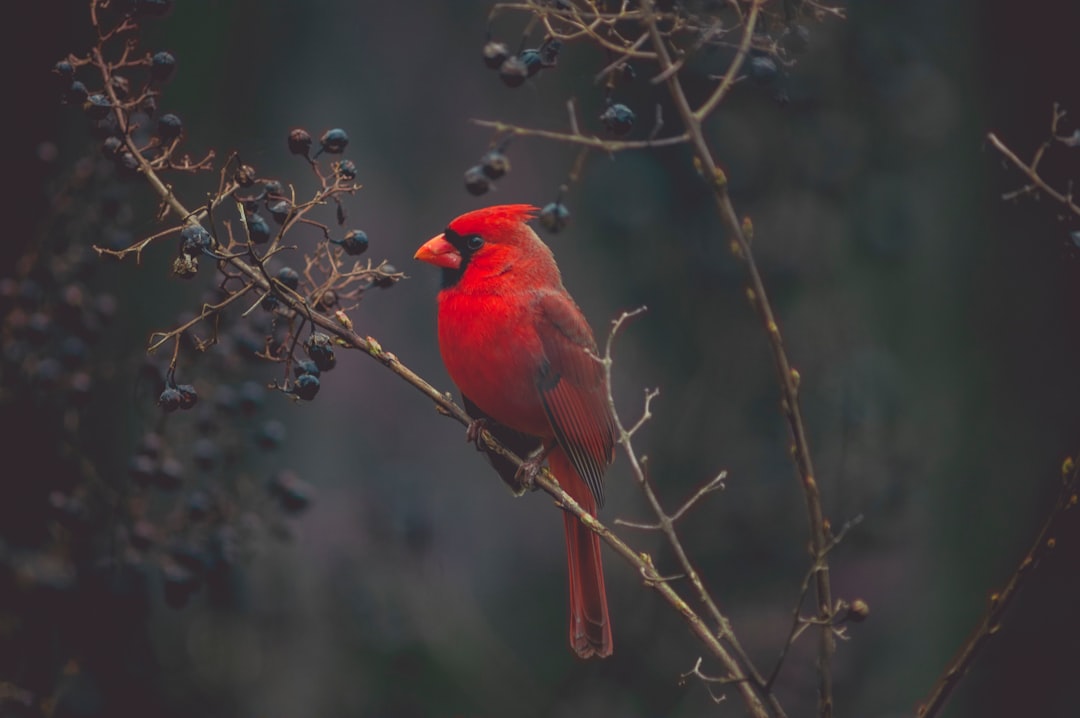
On the path ahead of me was a bird, so bright and red, it had no earthly right to be in Scotland.
It stood on the path in front of me and stared at me.
I had seen it before. But never here. What was going on?
I had only ever seen a bird like that in the US. I have never seen one in Scotland before or since. And I have spent a lot of time in the woods here.
When I got home, my mother called me. Derek had just passed away.
I knew it was him.
I looked up the bird online, and I thought it was a Red Cardinal. I’d seen them before on Long Island, and I was sure it was that.
Derek was the only member of my family ever to have visited me in the US while I lived there. He came to visit me, secretly, after my daughter was born. We never told anyone, because my mother is deathly afraid of flying, and was literally undertaking therapy and hypnosis to build her courage up for a flight the following year. (Although she needn’t have bothered, since Obamacare and the Jones Act were soon to destroy my financial prospects, and force a self-deportation anyway).
There were other signs too. I had three bird signs, in three days. The second was too weird to get into right now, but in the end, I just knew.
The six weeks of lockdowns came and went. We went to a funeral where nobody was allowed to hug or shake hands. The police in the village looked at us uneasily, but wisely decided to keep their distance, as we congregated in a visibly sort of ‘f*ck off’ fashion that signalled intuitively to them that our pain currently outranked their pandemic.
Easter the following year, I believe, was my literal ‘come to Jesus’ moment. I was getting ready to attend services at the local Church of Scotland. The denomination into which I was baptised, but was never really part of, growing up.
I could see Jesus Christ, in my minds’ eye, as I looked across my dining table. He looked back.
It was a visualisation, rather than a ‘vision’. I know that. But it meant something.
It meant that I knew that I was living in a new world.
The insistence of those years, that the earthly authorities demanded sacrifices from us all, while demanding none from themselves. The reversal of self-sacrifice. The total lack of self-awareness or attempt to justify the descent into medical apartheid and authoritarianism. The obvious politicisation and timing of events in the media. The insane censorship. The fake apologies.
I have never been so ‘done’ with anything in my life as I was at that time.
Almost every day since then, I have read the bible, prayed, and/or listened to bible study podcasts online.
I started writing this blog so that whenever these kinds of challenges happened again, I’d have found more friends of like mind.
And, as PVK would call it, I went right through the Peterson-Pageau Pipeline, into the online metageliverse. Or something.
Discovering Orthodoxy online has been so revelatory. Like the conspiracy-minded people I followed through the plandemic, who got so close, but ruined it, by extrapolating the heuristic of general suspicion too far to be of practical use, I realised something. A large part of the reason we are in this cultural and political mess is that very few of us alive today have actually heard or considered the original argument.
That’s what Pageau, DeYoung and Damick supply, in spades. (PVK provides the healthy scepticism and critique to help you safeguard your sanity and check that you’re not falling into a cult, along the way).
Peterson and Pageau are a symbolic double act. The hilarious thing is that I only realised this by looking up the play, Waiting for Godot, because Jordan B Peterson constantly refers to it. I read up and listened, and there is a striking comparison to be made.
Peterson is in many ways likeVladimir. The Cartesian mind. The brain in a jar.
His health is constantly plaguing him. His paintings, sculptures and tailoring, like Didi’s props. His words flow beautifully, intelligently. He is always ‘looking up’. The meaning is Godot.
Pageau is the body. Like a holy Estragon. The fact that he is a sculptor symbolises the real. The manifest. His orthodoxy is visceral. His tangents, fairy tales, and a wide variety of friends represent the love of a diverse life. He looks at the detail and finds meaning in all of the things.
Peterson furrows his brow and asks ‘what is the West, without Christ? Where is the meaning? What are we doing?’.
Pageau says, ‘It’s here. Look. Come, and eat with your friends. This hierarchy is here for you. But it is over here’.
Peterson says, ‘I can’t’. ‘I’m waiting for God to come and wrestle me back’.
Pageau says ‘OK’, — *Goes away and draws Little Red Riding Hood. * —
Part of the hell of the postmodernist western decline that we are living through, is the unnecessary extrapolation. Because we’re all good little democracies, everyone has to be smart. Everyone has to have a unique and considered opinion on everything. And everyone has a ‘right’ to live as they see fit.
The kind of existentialist agony of JBP reflects the cruelty of the vaguely Protestant idea that every individual should interpret scripture in their own way.
Nobody would think it sensible if I took a first trip sea cadet and put them at the helm of a high speed craft carrying a cargo of nuclear waste, and sent them out to sea after a week of basic training, telling them ‘It’s OK, Just interpret the manual as you see fit’.
No. They’d see it as cruel. And quite rightly.
And yet, that is how we run our society.
Peterson betrays himself in his (overall wonderful) Peterson Academy lecture on The Sermon on the Mount. Almost in the first sentence, he says, ‘Why would it be on a mountain? … Do you become enlightened in a valley, in a pit, or on a mountain’?
An astute observation, but one that illustrates how blind we all are to how Gnostic we have become.
The goal of Orthodox Christians is reportedly Theosis.
Theosis, is not Gnosis.
We are supposed to become like God. Not to become enlightened.
The soul, the mind and the body are to be brought into alignment with every divine principle that points to the order and beauty and virtue of heaven.
That is expected to take us over a lifetime, and beyond, of refinement, discipline and self-correction.
The Jesus prayer is supposed to be a tool for calibration. Not a mindless mantra to create a catatonic state of epiphany.
So, then, what are we to make of Scott Adams’ final message, delivered so poignantly by his ex-wife, after his recent passing?
Does one C word lead to the other?
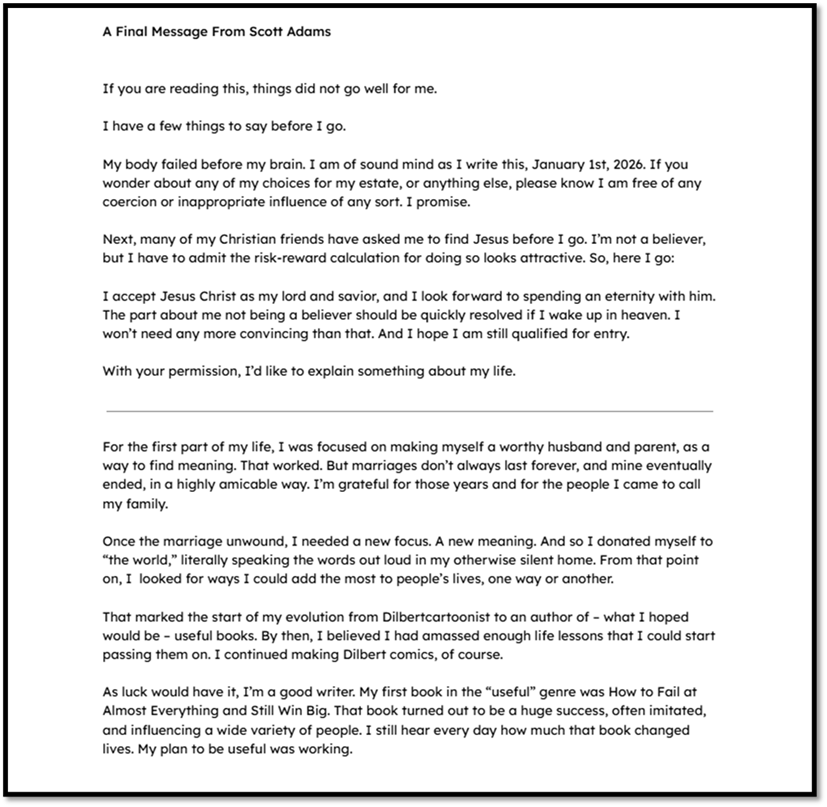
…
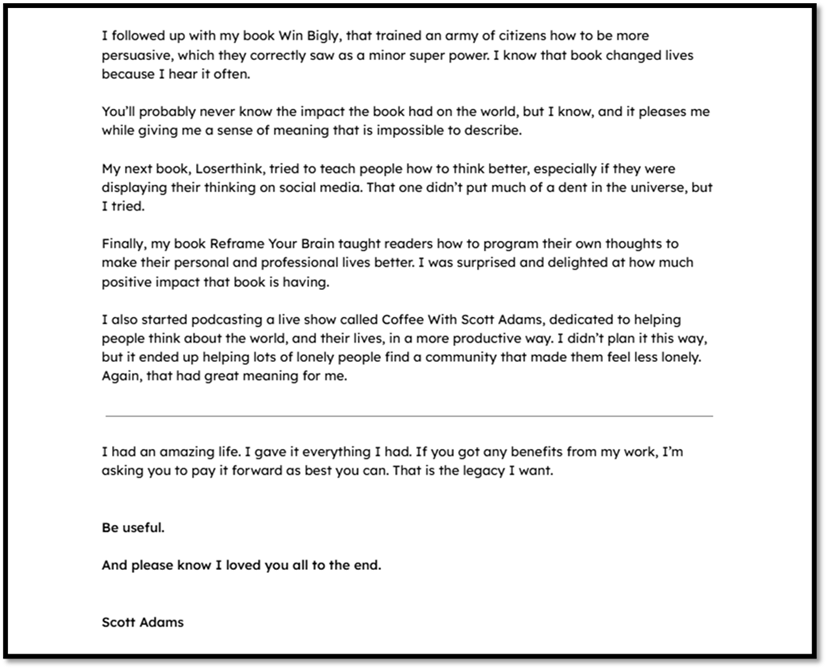
Adam’s Wager, naturally, while reminiscent of Pascal’s, had a distinctly engineer’s flavour to it.
“I’m not a believer, but I have to admit, the risk-reward calculation for doing so, looks attractive. So, here I go:
I accept Jesus Christ as my Lord and Saviour, and I look forward to spending an eternity with Him. The part about me not being a believer should be quickly resolved if I wake up in heaven. I won’t need any more convincing than that. And I hope I am still qualified for entry”
[emphasis my own, obviously].
I love Scott Adams. So, when I read this, I hear his voice, his cheeky smile, and his knowing ‘what have I got to lose’ intellectual justification all combine effectively to make me love him even more.
This is perfect logic for an engineer. It’s what they call ‘End-Point Testing’.
Like when the doctor asked me if the surgery I had on my penis as a child had had any detrimental effects on my libido over the years. ‘Well, I’ve got three kids, if that’s what you mean?’. That would be a successful End-Point Test.
God would appreciate that, having made Scott what he was. God loves a trier, as we say in Jockland.
[If all you recent new subscribers are wondering why this jumped up Jock lets it all hang out, it’s not for shock value. After the aforementioned idiocy and indecency of our entire intellectual class widely demonstrated during the lockdowns, I will never again fear the judgement of another human being. Except my wife. Maybe the kids.]
Deathbed conversion.
I can think of nothing more American. It’s almost like another consumer product, eh? There are even YouTubers making money claiming this as a victory for Christians everywhere.
A cynic would say that twice saying you don’t believe would cancel out the single statement of acceptance. A cycnic might even look at the geometry of the end point test. Why should God have to prove his existence to you, Scott Adams, before you grant Him the benefit of your belief? Isn’t that putting yourself above God?
If that was the way things roll, that wouldn’t be God, that would just be a god.
And who was there to accept this profession of faith, or entry to a church? A priest with authority? Or an anonymous collection of strangers in the cloud?
Who is to say?
Well. I think, thankfully, belief is a lot more real than a set of propositional words.
What did Scott do here? He confessed his sins publicly. He detailed his repentance, charity and giving. He expressed hope, a desire for perfection and forgiveness and legacy. He expressed gratitude with courage. He asks the same of us.
And he said he loves us all.
Yes, this is ritual. Yes, it has a Christian shape. And, yes, it universalises the idea of family in a way that we need right now.
But, in bittersweet fashion, dying alone, and baring your soul to internet strangers also illustrates to us the danger of our time. The fresh and brisk feeling that we have when we are denuded by the absence of family, friends, neighbours, church and community.
I’m guilty of all that too, with far fewer redeeming successes in the world. All I can do is agree, and hope and pray as well.
But what for?
God is just a fact. We do not need to believe in Him. He is definitive. We are not.
The good news is that we shall all be resurrected, in body as well as mind. Somehow. And we will be judged on how we have loved.
We may all be sinners. But I do not believe that Scott Adams was in any way a high-handed one. And I pray that that is not lost.
As for the rest of us, I highly recommend we don’t fight to keep the old world that is dying round about us. We must be as water, ‘At the very least’, and accept that some things need to change. Including ourselves, while we still can.
(And if you’ve made it this far, check out the Whole Counsel of God Pod, PVK, and The Symbolic World with Jonathan Pageau. You will not regret it. Particularly if your mission is to be a better person, rather than simply to know more.