
Part 1 – Everything is what you compare it to.
It’s day 30 on board this ship for me. I have no clear sign-off date, but I hope my part of the job will be complete in the next 7 to 10 days. I’ve agreed to stay a couple more days after that to ensure the next cargo is loaded correctly, but I’m planning to jump into a hotel once we’re alongside.
Six weeks is a fairly long trip for me these days. At this stage in my career, ten days to three weeks is more normal.
Captain Scotty is a reader-supported publication. To receive new posts and support my work, consider becoming a free or paid subscriber.
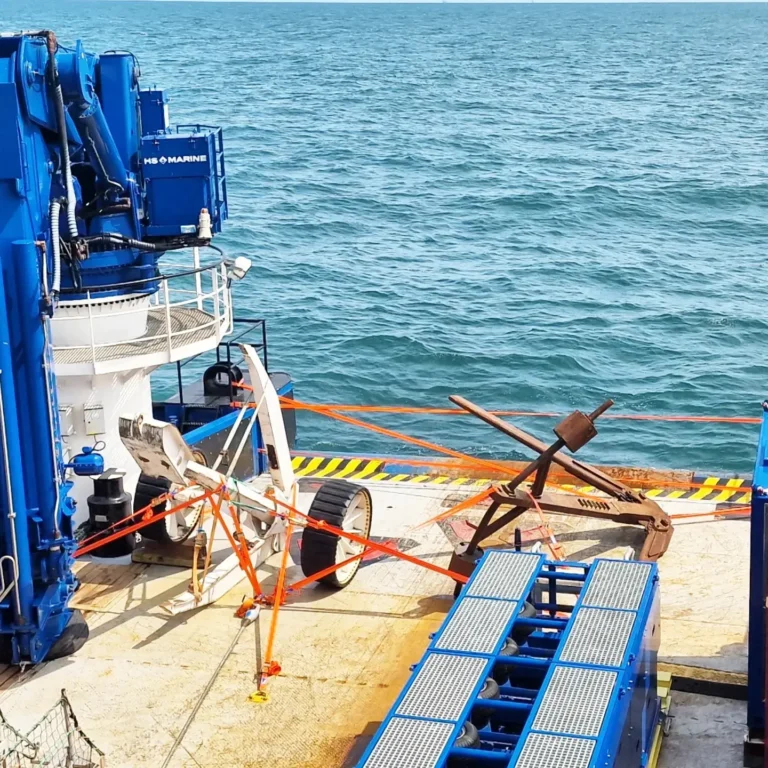
This vessel is Norwegian. It was built in Norway, for Norwegian owners and Norwegian crew, to work in the North Sea.
A Norwegian Standard vessel is just unbelievable to us peasant Scots, who make up about 30% of the regular crew here. The standard of carpentry in the cabins, the space afforded to common areas, high quality entertainment systems, two gyms, darts, table tennis, 5 choices of main entrée at every meal, plus about six types of salad, desert options with every meal, social events once month, free WiFi faster than what I get ashore, unlimited soft drinks, coffee, etc. I’m allowed access to a 21 m wide helicopter deck for my walkies. I have been given a desk in the client’s office with a full suite of CCTV and comms, as well as an office in my cabin. They even carry a medic, despite not having enough people on board for that to be mandatory under law.
The Norwegian guys normally work for two weeks, then spend four weeks at home on full salary. However, due to the logistical cost of transport and admin, here in German waters, they switched to doing four weeks on, eight weeks at home.
Relatively speaking, they claim they are financially worse off than the Scots on board, who work a month on, a month off anyway. Merchant seafarers in the UK who spend more than 180 days at sea and call at one foreign port are entitled to a 100% Seafarer’s Earnings Deduction, which means a full refund of your income tax annually. (The least the taxman could do for us, when we basically have no employment rights, sick leave, holiday pay, or deductions for our mandatory medicals and training expenses that can run to thousands each year, depending on your trade. Let alone, when you consider that we consume very little from the public purse on the whole.)
However, the Norwegians pay full income tax, but they enjoy a more sustainable lifestyle with twice as much time at home with family and friends and retire to a final salary pension.
There is no Merchant Navy pension anymore.
Recent reports from academics and insurers have shown that seafarers have up to a 15x higher suicide rate than any other profession ashore. Although many dispute this figure, concede that only the ‘hangings’ that occur overnight can be classed as suicides for certain. The people who step overboard in the night, when they’ve had enough of living as a widget in the globalist machine, could be classed as homicides, or just accidents.’
So that’s alright then.

I have my moments offshore, but I have to say I’m very lucky. I’ve suffered enough to appreciate what I have.
My wife takes care of our children and me. She runs the household very ably while I’m gone. We can afford to get by and have a nice holiday once in a while. I’m self-employed, so I can pick and choose contracts now, so that I’m ashore for the majority of holidays and birthdays. I can afford to make it up to the children when I can’t. We are mostly healthy, and we have friends and family.
Importantly, in my position, nobody can make me do any work that is against my conscience.
For all these things, and more, I am truly grateful.
None of these things was guaranteed for me. I started out life relatively poor, in a divorced household, growing up in a council house on a rough street, at the end of every line.
A life at sea has saved me. It gave me structure, discipline, and employment. But more than anything, it has given me gratitude.
When you travel the world, not as a passenger, but as one who makes their passage along the way, you rub shoulders with all kinds of people along the way. Criminals, tyrants, psychopaths, Nazis (Not pretend ones that the Left moan about in America, but actual ones who actively bemoan the death of Hitler, buy SS uniforms in front of you, and tell you straight to your face that you shouldn’t have married your damn Jew wife, but, well, you know).
You see real poverty. You see real corruption. You see real ignorance and ugliness along the way.
One book that I read that completely changed my life was Mind Gym, written by Gary Mack & David Casstevens (Foreword by Alex Rodriguez), and published by McGraw Hill in 2001. The subtitle is ‘An Athlete’s Guide to Inner Excellence’.
I had finished a worthless degree at University, been unable to join the Royal Navy due to the 2008 GFC over-subscription for commissions and was about one-third of my way through a Merchant Navy cadetship program. I was serving a six-month trip on a cruise ship.
After having a fair amount of sea time with the Royal Navy Reserve, a degree in Marine Management, and a bit of college, I had been struggling a little with shipboard realities. Being told that all that smart guy cr*p I’d learned in the Navy was not how they do it here, and being forced to go back down on deck and do months worth of scrubbing decks and cleaning with the deck crew (who were all Filipino), was not what I’d hoped life would be like on a luxury round the world cruise liner.
In fact, my time on deck with the Filipinos turned out to be the absolute highlight of my sea time. I’d go back to those long days in the sun with a can of paint or a brush most any day of the week now. And driving the tender boats from the ship at anchor, into the various tiny harbours all around the world that were too large to accommodate the mother ships turned out to be the best training I could possibly get.
But when I bought that book, for $16.95 in a Borders Books store in Fort Lauderdale, Florida, I wasn’t appreciating what I had yet.
I was struggling with my ego. I was struggling with starting work at 04:00 every day, doing eight hours work, taking a break, then doing another five hours in the evening. I was struggling with a verbally abusive boss. I was struggling with my ego that said I was already too qualified and experienced for half of the stuff the boss was making me do, just to keep me busy.
I had also cracked a tooth the day before I left, and the dentist didn’t have time to see me. By the time I got back six months later, he had to treat me for septicaemia and send me to a private hospital. So, you know, I was pretty tired.
But the hardest pill to swallow was going back to being completely novice at something, when you’re already sort of able to get by making the right noises as an officer.
Boat handling was hard.
Driving a twin-screw lifeboat is easy for me now, but back then, the pressure would get inside my head. The staff captain was judgmental. The bosun would shout at you for every scratch you dared to put on the gel coat with your bloody incompetence. And if you had eighty or ninety passengers on board, (who were almost entirely loud mouth boomericans), every little bump, mistake, or failure was made known to you rather quickly by merciless tongues.
It was a good school. Ritual humiliation makes you work damn hard.
But this book helped.
Chapter one of Mind Gym quoted famous American Baseballist, Yogi Berra:
“Ninety per cent of the game is half mental”.
(It also has an unfortunate quote of Bruce Jenner saying ‘You have to train your mind like you train your body’. A sentiment which stands true, but comes from a source that has aged like milk in the hot sun.)
The book is highly conversational and invites the reader to visualise their best days and their worst days of performance. The book was important to me as someone who’d come through University and urgently needed to become re-grounded in the reality of high-stakes physical performance.
I’m not saying I’m an athlete, by any stretch. But my profession is all about readiness and performance under pressure. And I was only dimly becoming aware of that, at that stage.
On that trip, the worst days I had to compare myself to were days when I had crashed the boat hard into the quayside and cracked the hull. Fortunately, those boats wouldn’t sink with damage like that, but boy did I get chewed out by the Filipino Bosun, who had to spend the rest of the week repairing the fibreglass and the gel coat, on top of his regular duties. If that doesn’t sound too unreasonable to you, remember this guy was a lifelong alcoholic from the days when that was mandatory at sea, and I was seriously cutting into his evening visiting hours with Mr Jack Daniels.
Eighteen years later, I still know all the curse words in the Tagalog language, and to this day, I use them in a Mindanao accent, because of the impression he made on me.
That was my worst day in that context. I hadn’t had many good days yet at 22 years old, but only glimpses of them.
The book asked me to visualise the good and to remember the bad. (We’ll get to True and Beautiful in another article).
It also reminded me to put the bad in context. If I fail, what is the worst possible thing that could happen?
Well, I could kill a bunch of elderly passengers and spend the rest of my life in a Brazilian prison for manslaughter. But, probably not.
But that visualisation and comparison were enough to keep me calm. It was enough to make me forego my four hours of rest time in the afternoons and just get an extra four hours of driving time under my belt. It became enough to make me stop drinking alcohol the days before I knew I’d be driving boats. It was enough to make me read all of the manuals for the boats, the engines, the cranes and davits that launch them.
After about nine or ten months of that, I was one of the best boat handlers among all the officers. Even many of the senior ones. To the point where my Captain allowed me to pilot the entire ship into shallow waters and perform an anchorage, as a cadet, when even his chief officers were not ready for that. (For which, I got more abuse below deck, but I’d toughened up by then).
The reward?
I was able to drive boats up the Amazon River in full flood, as trees twice the size of my vessel whizzed past me at six knots. I got to be a hero when a squall picked up in the mediterranean sea, and threatened to trap all of the passengers ashore unless someone could get them back to this ship, as it swung round it’s anchor and six foot waves crashed upon us from nowhere.
… the confidence that comes with competence.
But most of all, I learned to compare.
I’ve had worse days since.
Nearly being asphyxiated by poison gas in a ballast tank. Narrowly avoiding being crushed to death by cargo. Trying desperately to avoid being murdered by one of my own crew in the Middle East. Being blackmailed by smugglers, and threatened by agents of corrupt countries, and pirates.
Everything is what you compare it to.
This article is not trying to be a ‘look at me, I’ve had it so hard’ kind of thing. The reason I’m writing this is that I know that hard times are coming. For you, and for all of us.
They always are, and always have been.
All you have to do is look at the state of the UK right now, and Europe generally. We are facing a future that looks more like the fourth century AD than the sci-fi future I was promised as a child growing up. That’s why I want to tell you the parts of my story that I think apply to the hard times ahead.
I know for certain that Good things almost always come out of bad, if you wait long enough and look hard enough. It’s one of the observations in life that caused me to accept that there is a God at work in this world.
But that doesn’t mean that we will not suffer.
I hope that the older people out there who read this blog will also share their stories and attest that the many and various ways in which we suffer, do in fact make us stronger. And that young people should absolutely not be afraid to suffer if it serves a greater purpose.
PS, I’ve dropped the price for paid subscribers. I hope this reflects a fair discount against the lack of articles for the past years, which has maxxed me out. I hope to make it up to you soon. The YankeeJock.com website is also in the process of a series of upgrades, and paid subscribers will hopefully receive some rewards for their long-appreciated support in the next few months.
Please comment, shippers. I like your comments.
Captain Scotty is a reader-supported publication. To receive new posts and support my work, consider becoming a free or paid subscriber.